
The maritime industry in Nova Scotia

The water
The registry's Nova Scotia ports face the Atlantic coast, the Bay of Fundy, the Northumberland Strait and the Strait of Canso. Fisheries and Oceans Canada reports that the largest tidal ranges in the world occur in the Bay of Fundy, where a 16 metre (53 foot) tide range can be observed. Ports on that side, such as Digby, Hantsport and Yarmouth, work with that tide.
The Strait of Canso separates Cape Breton Island from the mainland. Between 1952 and 1955, more than nine million tonnes of rock fill went into it to build the Canso Causeway, whose foundation lies 66 metres below the strait, according to Parks Canada. A Library and Archives Canada history says the causeway gave the area a deep water ice-free port on the Port Hawkesbury and Mulgrave side. Today the registry lists 7 companies headquartered in Point Tupper, on the strait.
Ports and how they are governed
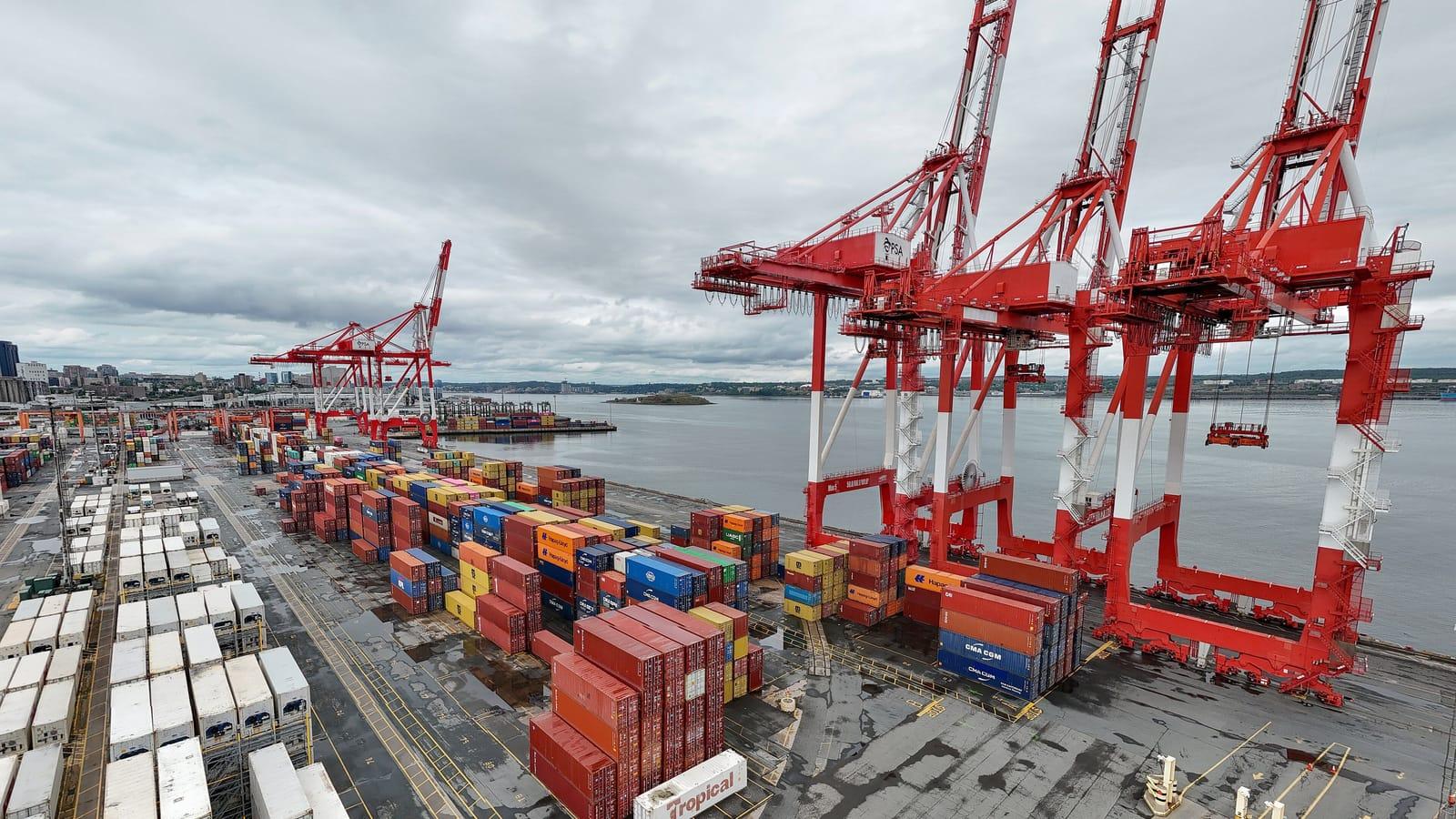
The registry lists 22 ports in the province. The Port of Halifax is a Canada Port Authority. Under the Canada Marine Act, a port authority is incorporated for the purpose of operating a particular port, and the Act aims to promote the success of ports.
Most other ports are smaller. The registry lists 12 Transport Canada public ports, 4 other public or government ports and 5 private or commercial ports.
On Cape Breton Island, Sydney Marine Terminal, North Sydney and Louisbourg sit on the Atlantic side. On the Strait of Canso are Port Hawkesbury Pier and Mulgrave Marine Terminal. In January 2025 the province announced $750,000 in upgrades at Mulgrave, including a new bridge, so that large wind turbine components can pass through the terminal more safely. The Northumberland Strait side has Pictou and Pugwash.
Pilotage is federal. The Atlantic Pilotage Authority is a Crown corporation that provides marine pilotage in Atlantic Canada, and its compulsory pilotage areas include Halifax, Sydney, Sheet Harbour, Pugwash, Bras d'Or Lake and the Strait of Canso.
Who operates here
The registry lists 188 companies headquartered in Nova Scotia. The largest groups are Marine Services (50), Freight Forwarder (32) and Shipyard (32). By city, the leading headquarters are Dartmouth (49), Halifax (30) and Point Tupper (7), so the industry is concentrated around Halifax harbour and the Strait of Canso.
Marine services are the largest group, with 50 companies, many of them around Halifax harbour. The province also has 32 shipyards. Most are boatbuilders on the South Shore and in southwest Nova Scotia, from Lunenburg to Cape Sable Island, the Pubnicos and Clare, building fibreglass lobster boats and other vessels for the inshore fishing fleet. Larger repair yards work in Halifax, Shelburne, Liverpool, Pictou and Port Hawkesbury.
Freight forwarders and logistics companies handle the movement of cargo through the ports, and the registry lists 32 and 31 in those two sectors. Port and terminal work is carried out by 7 terminal operators, 3 port operators, 2 stevedoring companies and 3 shipping agents. Resource industries appear as well, with 8 oil and gas companies and 3 mining companies. The registry also lists 3 ferry operators and 3 maritime law firms.
Where to start
To see everything in the province, browse the Nova Scotia directory. For vessel work, start with shipyards or marine services. For cargo handling, start with freight forwarders, logistics companies or terminal operators. For vessel calls, see shipping agents and stevedores. Among the ports, Halifax is the natural first stop.
Sources
- Fisheries and Oceans Canada, Canadian Hydrographic Service, Frequently asked questions (tides)
- Parks Canada, Building of the Canso Causeway National Historic Event
- Library and Archives Canada, Scotia Ferry
- Government of Nova Scotia, Province invests in Strait of Canso Superport (January 20, 2025)
- Atlantic Pilotage Authority
- Justice Canada, Canada Marine Act
Nova Scotia in numbers
Take a closer look
You're missing 188 head office locations and contacts for 21 ports in Nova Scotia.
With an account, you can see them on every profile. It only takes 30 seconds to sign up.